Can the United States Buy Its Own Debt?
The Treasury borrows; the Federal Reserve is a separate central bank. What Fed bond purchases can and cannot do.
Published: October 6, 2026 · Last reviewed: October 6, 2026 · Source released: Last updated July 19, 2024
The short answer
Not exactly. The U.S. Treasury borrows by selling bonds to investors. The Federal Reserve is a separate central bank. It can later buy existing Treasury securities in the open market as part of monetary policy, but it does not buy newly issued securities directly from Treasury or competitively bid at Treasury auctions.
How it works
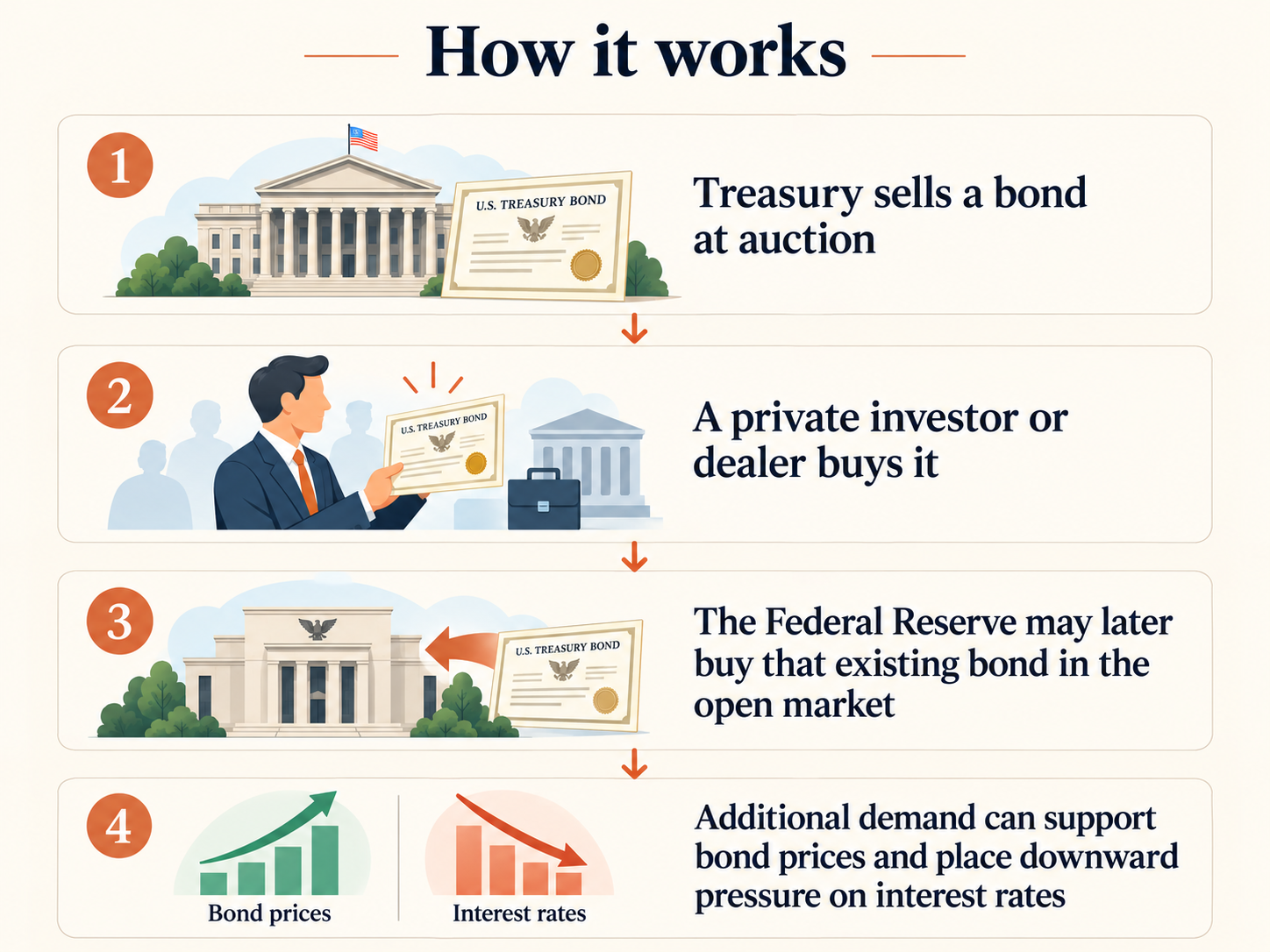
- Treasury sells a bond at auction
- A private investor or dealer buys it
- The Federal Reserve may later buy that existing bond in the open market
- Additional demand can support bond prices and place downward pressure on interest rates
When the Fed buys bonds on a large scale to lower longer-term interest rates, that is called quantitative easing. Everything the Fed owns (such as Treasuries) and owes (such as bank reserves) is called the Federal Reserve balance sheet; these purchases make it larger.
What Federal Reserve purchases can do
- Increase demand for Treasury securities
- Add liquidity to financial markets
- Put downward pressure on some interest rates
- Ease financial conditions during periods of stress
What they cannot do
- Erase the federal debt
- Eliminate the government's interest obligations
- Guarantee low interest rates forever
- Permanently replace willing private buyers without economic consequences
A balanced warning
Large or sustained Federal Reserve purchases can help stabilize markets, but they may also create inflation, confidence, and policy-exit risks depending on the size of the purchases and the condition of the economy. This is a policy mechanism, not a forecast.
Official sources
Board of Governors of the Federal Reserve System
Supports: The Fed buys Treasuries in the secondary market, not directly from Treasury at auction.
Published Last updated July 19, 2024 · Observation Not applicable — explanation of policy · Last verified October 6, 2026